Reactor-Specific Melt Gear Pump
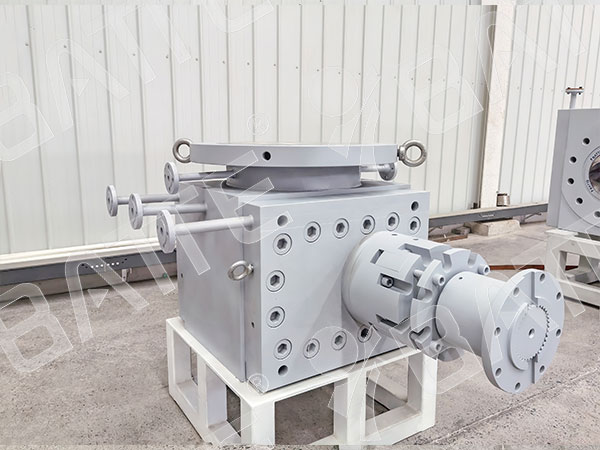
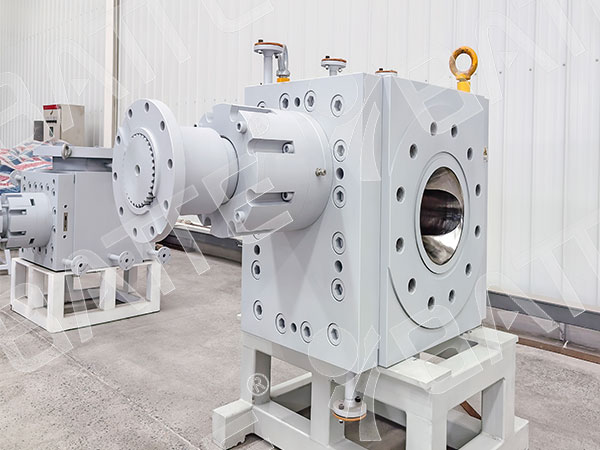
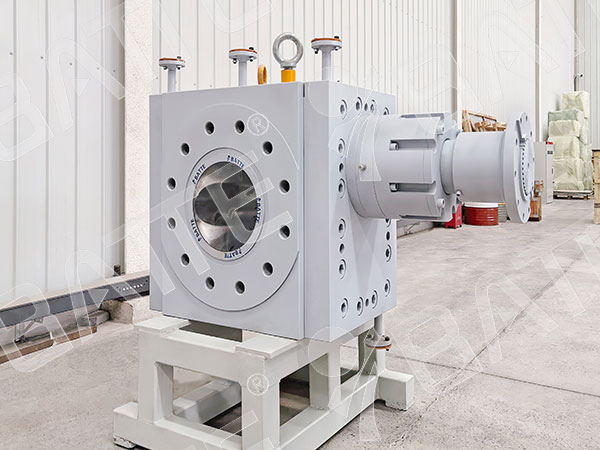
The reactor melt gear pump (also known as a reactor bottom melt pump or reactor discharge pump) is a positive displacement conveying device specifically engineered for high-temperature, high-vacuum, and high-viscosity polymer melts. Its core function is to facilitate discharge from the reactor bottom, provide precise metering, and deliver pressure boosting. It is widely compatible with polymerization processes in chemical, chemical fiber, plastic, and resin industries.
I. Core Working Principle
As a positive displacement forced-feed pump, it relies on the rotation of a pair of precision-meshed gear sets. This action causes the working volume formed by the gear cavities and pump body to periodically change, enabling melt suction, conveyance, and discharge.
The drive gear rotates the driven gear, creating negative pressure on the feed side to draw melt from the reactor into the gear cavities.
Gear meshing propels the melt through the pump chamber to the discharge side, completing pressurization and conveyance.
Precision-controlled clearances between gears and pump housing ensure sealing integrity while accommodating thermal expansion, preventing seizure.
II. Product Structure and Key Components
1. Core Components
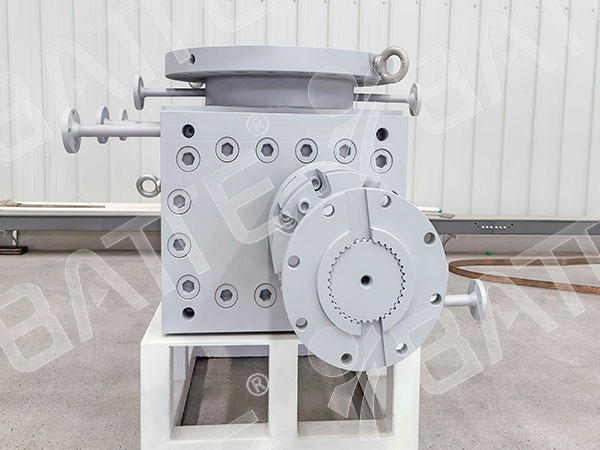
Pump Body: Alloy steel / stainless steel / corrosion-resistant alloy construction, featuring a heating jacket / flow channel to maintain melt temperature.
Gear Pair: High-strength alloy steel (nitrided steel / tool steel) with involute / circular arc tooth profiles for optimized pulsation; surfaces may receive wear-resistant coatings like tungsten carbide.
Bearing System: Side-plate self-lubricating bearings with wear-resistant coatings, supporting gears while bearing axial/radial forces.
Sealing Assembly: High-temperature compatible (≤400°C), typically featuring a combination of dynamic melt seals + high-temperature packing/mechanical seals for vacuum applications.
Drive System: Motor + reducer + universal coupling, with variable frequency speed control enabling near-linear flow regulation.
2. Structural Features
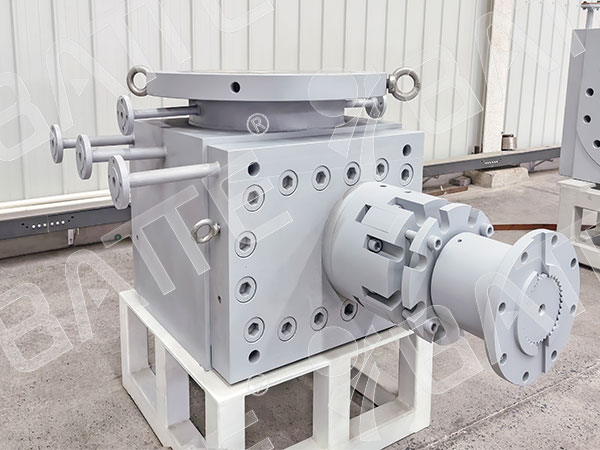
Large-diameter bell-shaped inlet: Designed for high-flow, high-viscosity melt suction from reactor bottoms.
Heating/Insulation Design: Thermal fluid/electric heating prevents melt cooling and solidification.
Vacuum Compatibility: Inlet withstands -0.05 to -0.09 MPa vacuum for polymerization reaction discharge.
III. Core Product Advantages
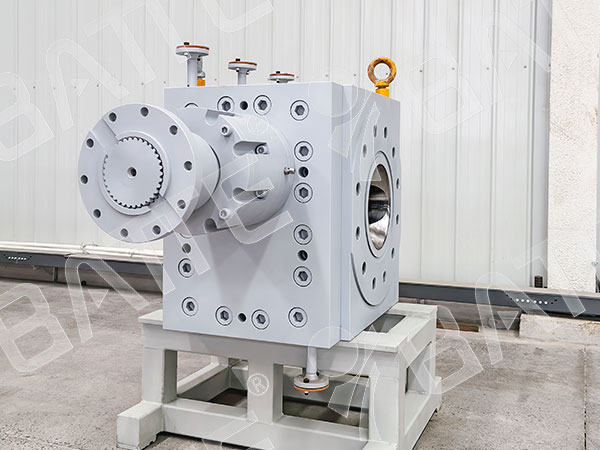
1. Superior Vacuum Self-priming: Large inlet flange + negative pressure design enables stable high-viscosity melt conveyance under extreme vacuum conditions.
2. Precise Metering: Positive displacement operation ensures linear flow-to-speed correlation with minimal pulsation and metering accuracy ≤±1%.
3. High-Temperature/High-Pressure Compatibility: Materials and seals withstand extreme temperatures and pressures, suitable for demanding polymerization conditions.
4. Stable and Reliable: Precision machining + wear-resistant coating ensures extended service life and longer maintenance intervals.
5. Easy Installation: Direct reactor-bottom connection with universal joint compensating for thermal expansion displacement.
IV. Typical Application Fields
Textile Industry: Melt conveyance and metering for PET, PBT, PA, PP, etc.
Plastics/Resins: Discharge of hot melt adhesives, epoxy resins, phenolic resins, PC, and other polymer materials.
Chemical Polymerization: Discharge, pressurization, and precise metering from polymer reaction vessels under high-temperature/high-pressure conditions.
V. Selection and Installation Guidelines
1. Selection Criteria: Medium viscosity, temperature, inlet vacuum, outlet pressure, flow rate requirements, and material corrosion resistance.
2. Installation Method: Direct connection to reactor bottom using motor + gear reducer + universal coupling drive for easy maintenance and thermal compensation.
3. Heating Control: Integrated temperature control system ensures pump body and melt temperatures remain consistent to prevent solidification.
4. Seal Maintenance: Regularly inspect seals; prioritize combination seals in high-temperature applications to extend service life.
Email: sale@meltpump.com
WhatsApp: +86 158 3833 1071