How Exactly Does a Melt Gear Pump Work?
As a specialized positive-displacement pump, the melt gear pump relies on a pair of high-precision gears meshing and rotating to convey the melt. Its core operating principle can be broken down into three stages:
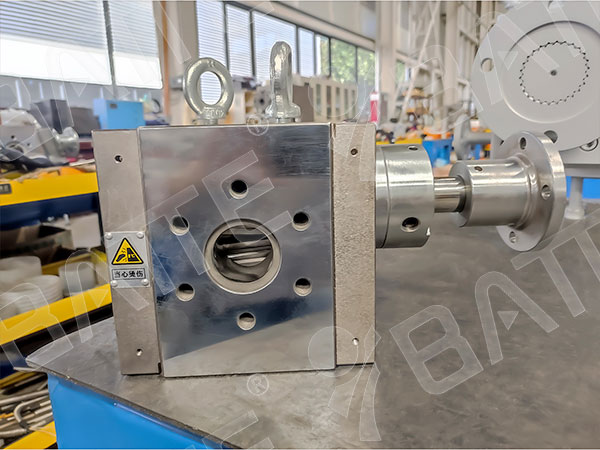
1. Suction of Melt via Negative Pressure
During operation, the driving gear rotates the driven gear in the opposite direction. On the suction chamber side, the gear teeth gradually disengage, increasing the volume of the tooth slots and creating a localized negative pressure. This automatically draws the melt discharged from the extruder into the pump chamber. The involute tooth profile design ensures a tight seal between the gear teeth, preventing any backflow of the melt.
2. Sealed Conveyance of Melt
The melt drawn into the pump chamber is sealed within the cavity formed by the gear tooth slots, the pump body, and the end plates. As the gears rotate at a constant speed, the melt is smoothly conveyed from the suction chamber to the discharge chamber. The flow rate remains uniform throughout the conveyance process, with no significant pulsation.
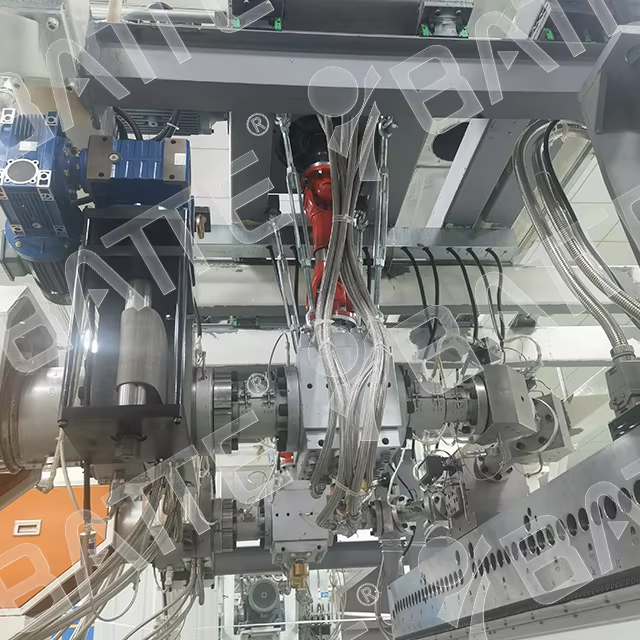
3. Pressure-Boosting and Pressure-Stabilizing Extrusion
When the gears rotate into the discharge chamber region, the tooth surfaces engage, compressing the volume of the gear pockets and forcing the internal melt out to generate a stable discharge pressure. The pressure barrier formed by the meshing gears effectively isolates the discharge from pressure fluctuations in the upstream extruder, resulting in highly stable discharge pressure. At the same time, flow rate and rotational speed maintain a strictly linear relationship; simply adjusting the rotational speed allows for precise control of the output flow rate, enabling high-precision metering.
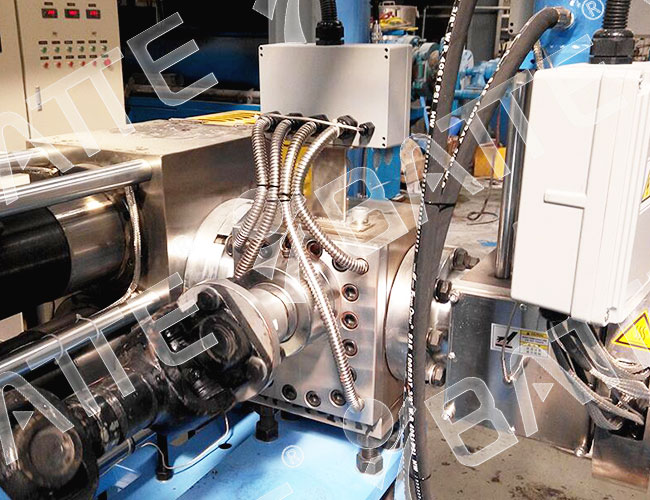
In summary, the melt gear pump operates through three continuous stages: material suction, sealed conveyance, and pressurized discharge. It relies on negative pressure for continuous feeding, ensures smooth material delivery through sealed gear pockets, and finally achieves stable pressure and pressurization through gear meshing compression. Thanks to its unique positive-displacement design, it isolates the unit from fluctuations in upstream extrusion pressure and precisely regulates discharge flow rate via rotational speed. By simultaneously fulfilling the three key functions of pressure stabilization, pressure boosting, and precise metering, it serves as a critical piece of equipment for stabilizing product quality and optimizing production processes in plastic extrusion lines.
Email: sale@meltpump.com
WhatsApp: +86 158 3833 1071