What’s the Difference Between Melt Pumps and Conventional Pumps?
In the field of industrial fluid transfer, melt pumps are widely used in various operating conditions due to their unique design. However, when it comes to transferring high-temperature, high-viscosity melts, conventional gear pumps often fall short. This is where melt gear pumps stand out for their superior performance. Zhengzhou Bate will conduct a comprehensive comparative analysis of melt gear pumps and standard gear pumps across six aspects: design positioning, applicable operating conditions, structural design, delivery accuracy, suitable materials and scenarios, and core advantages.
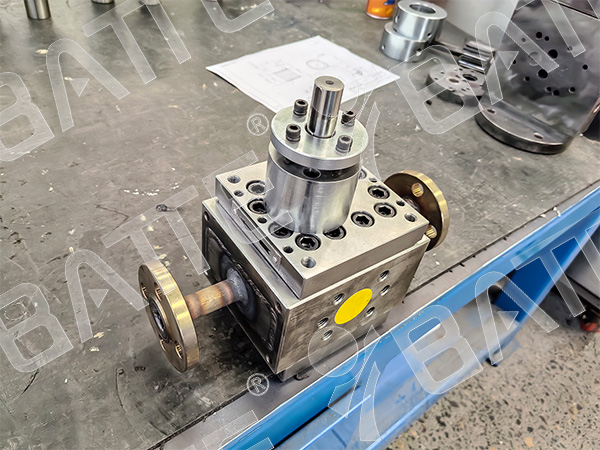
I. Design Positioning
Melt Pumps: Specialized, specifically designed for the precise delivery, pressurization, and metering of high-temperature, high-viscosity melts, and suitable for harsh operating conditions. Their design objective is clear: to ensure stable performance even under extreme conditions. Standard Gear Pumps: General-purpose, primarily used for routine delivery of materials at room temperature and with medium to low viscosity, without special resistance requirements. Their design emphasizes versatility and cost-effectiveness.
II. Applicable Operating Conditions
Melt Pumps: Temperature range ≤350°C, pressure 0–35 MPa, viscosity 0.0001–40,000 Pa·s. Supports vacuum feeding and can handle corrosive, high-viscosity, and complex operating conditions. Standard Gear Pumps: Temperature range: ambient, pressure ≤10 MPa, viscosity ≤1,000 Pa·s. Suitable only for standard ambient conditions; cannot handle high-temperature or high-pressure environments.
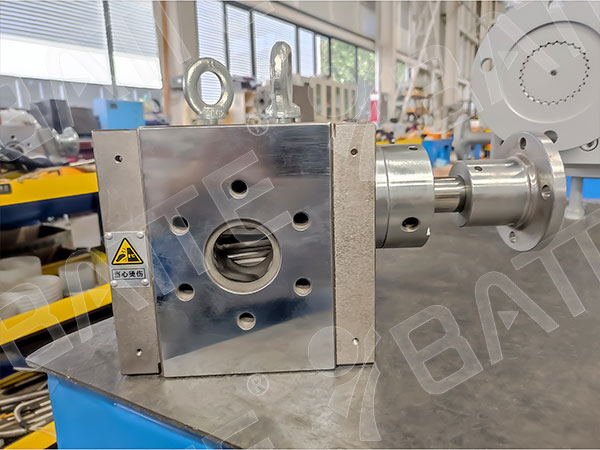
III. Structural Design
Melt Pumps: Featuring a precision-engineered structure, the gears are optimized with involute or arc-tooth profiles. They are equipped with heating jackets/electric heating, specialized seals, and high-precision clearance control. Components are manufactured from wear- and corrosion-resistant alloy steel. Standard Gear Pumps: These feature a simple structure, typically with standard straight-tooth designs. They lack dedicated heating or insulation structures, employ basic sealing methods, and have low clearance precision. Components are primarily made of standard steel and do not require special wear- or corrosion-resistant treatments.
IV. Dosing Accuracy
Melt Pumps: High-precision metering; flow rate maintains a strict linear relationship with rotational speed; minimal pressure and flow pulsation (controllable within ±1%); capable of precise metering to ensure process stability in subsequent stages; suitable for applications such as precision extrusion and fiber spinning. Standard Gear Pumps: Lower accuracy; significant flow pulsation; capable only of meeting basic “conveyance” requirements; unable to achieve precise metering; suitable for routine conveyance where flow accuracy is not a requirement.
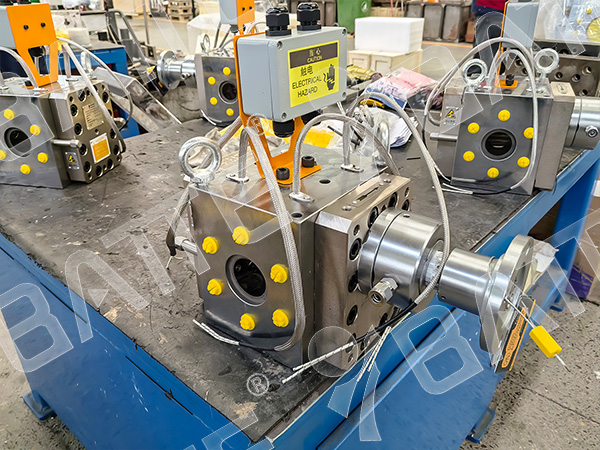
V. Applicable Materials and Applications
Melt Pumps: Materials include polymer melts (PET, PA, PLA, etc.), chemical fiber raw materials, hot melt adhesives, asphalt, and other high-temperature, high-viscosity materials that do not contain hard particles; applications include plastic extrusion, chemical fiber spinning, resin production, and biodegradable material processing. Standard Gear Pumps: Materials include lubricating oil, diesel, water, standard coatings, and other room-temperature, low-to-medium viscosity materials; applications include conventional scenarios such as hydraulic systems in construction machinery, general oil transfer, and small-scale chemical transfer.
VI. Core Advantages
Melt Pumps: High resistance to high temperatures, high pressure, and high viscosity; high precision, strong stability, and long service life; customizable; capable of replacing imported products; suitable for long-cycle continuous production; helps reduce energy consumption and costs. Standard Gear Pumps: Simple structure, low cost, easy maintenance, and high versatility; suitable for mass applications; meets basic transfer needs; requires no complex commissioning.
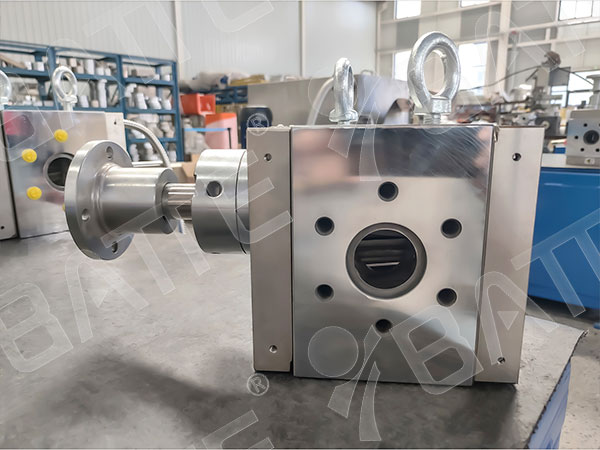
In summary, melt gear pumps differ significantly from standard gear pumps in terms of design purpose, suitable operating conditions, structural design, and delivery accuracy. When selecting a pump, users should weigh these factors against their specific operational requirements to choose the most appropriate model.
Email: sale@meltpump.com
WhatsApp: +86 158 3833 1071