What criteria should be considered when selecting a melt pump?
“Match the pump size to the extruder size”—that’s how a layperson would choose equipment! To make the right choice and avoid pitfalls, you need to thoroughly understand five core parameters; missing even one could lead to problems down the line. Today, let’s break it down in terms our engineers can understand:
I. First, Let’s Get Clear on Flow Rate and Output
You need to tell me exactly what the normal output of this line is. What are the minimum and maximum output ranges? The displacement, speed range, and motor/gearbox size of the melt pump are all determined by the output. If you choose a pump that’s too small, it’ll become a bottleneck, and the entire line’s production capacity won’t reach its potential. Choosing one that’s too large is even worse—long-term low-speed operation not only makes it unstable but also causes metering accuracy to fluctuate. Within a few years, parts will wear out quickly, wasting your money.
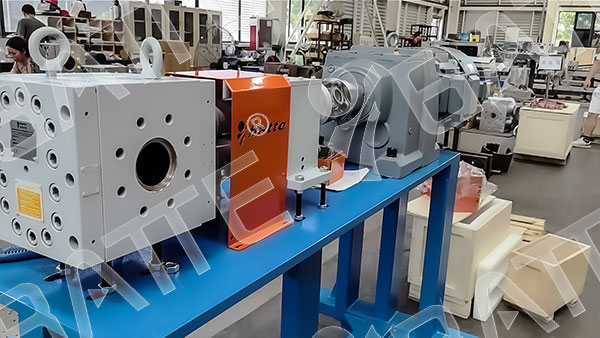
II. Specify the Material—and Provide an Accurate Viscosity Range
Don’t just tell me, “I’m just feeding in some plastic”—that’s as good as saying nothing! PET and PLA have vastly different viscosities, and the viscosity of standard PP versus modified, impact-resistant PP at processing temperatures is completely different—as you can see, from common materials like PET and PP, to engineering plastics like ABS and PC, to biodegradable materials like PLA and PBAT, and even TPU and rubber elastomers, not only do viscosities differ by several or even dozens of times, but their sensitivity to temperature and susceptibility to shear are all completely different. Even for the same material, differences in molecular weight or the addition of fillers and modifiers can result in significant variations in viscosity. When selecting a product, you must provide me with the specific material type and its viscosity range at processing temperatures—even a slight discrepancy can lead to different selection results.
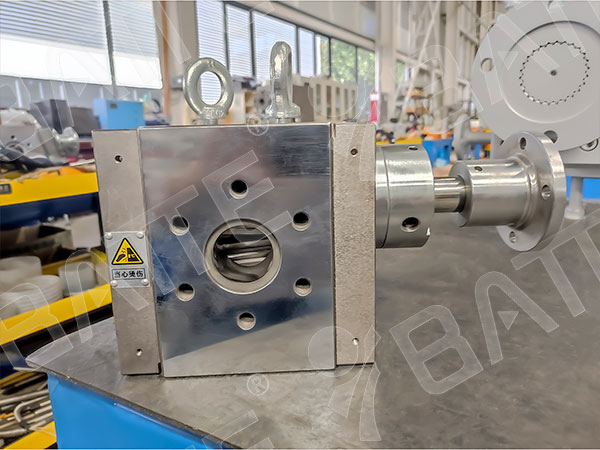
III. Don’t Just Look at Discharge Pressure—Inlet Pressure and Pressure Differential Are Key
Many people select pumps by only asking, “How much discharge pressure can it handle?” This is wrong! Is the inlet pressure sufficient? How high does the discharge pressure need to be? What is the inlet-to-discharge pressure differential? All three must be factored in. If the inlet pressure is insufficient, the pump cannot draw in material, leading to insufficient feed and a complete flow interruption; if the discharge pressure and pressure differential are too high, the pump’s load will skyrocket, forcing the gears, bearings, seals, and drive system to withstand much greater stress; selecting a pump that’s too small will lead to failure in no time. Additionally, factors such as mold resistance, the increase in resistance when the screen changer’s filter becomes clogged, and the resistance caused by pipeline length must all be factored into the pressure differential—nothing can be overlooked.
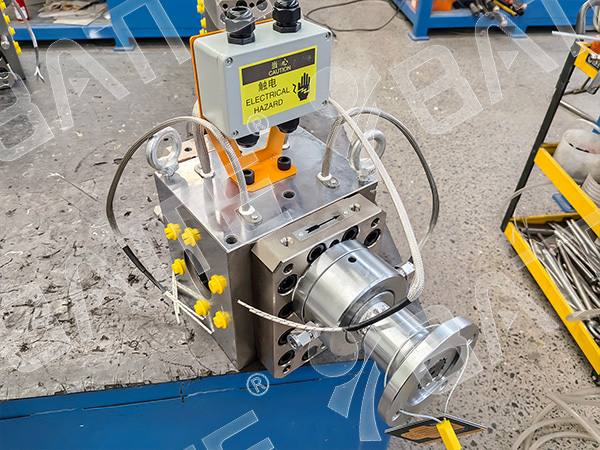
IV. Operating Temperature and Heating Method Must Match the Material
Processing temperatures for different materials vary significantly: ordinary plastics range from 200 to 300, while high-temperature engineering plastics can reach 400 to 500. The stability of the melt pump’s temperature control directly affects melt viscosity, which ultimately impacts product quality. There are currently three commonly used heating methods: electric heating, which offers precise temperature control; thermal fluid heating, which provides uniform heating; and runner heating, which is suited for specific production lines. Which one should you choose? It depends on how sensitive your material is to temperature fluctuations, the required precision, the energy sources available on-site, and ease of maintenance—there is no one-size-fits-all answer. Also, don’t forget the cleaning temperature during machine cleanup, which is generally several tens of degrees higher than the operating temperature; be sure to allow for sufficient margin when selecting the equipment.
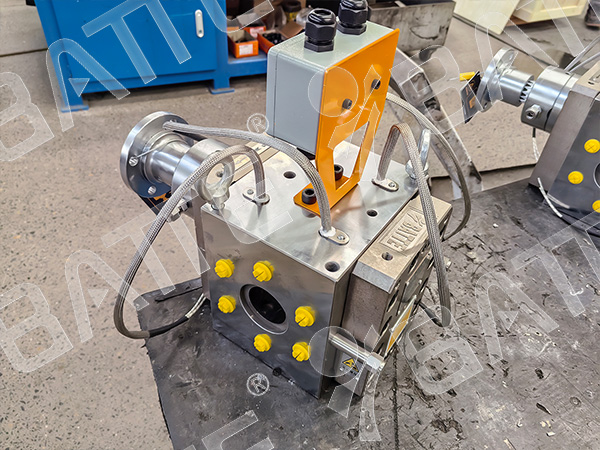
V. Seals and Materials Must Be Selected Based on Operating Conditions—Don’t Choose Blindly Just to Save Money
If the material being pumped is corrosive, volatile, toxic, or a special type of polymer, the materials for the pump body, gears, bearings, and seals must be specifically selected. Conventional configurations are sufficient for ordinary thermoplastics, but high-viscosity materials require sturdier gear shafts. Corrosive materials call for 316L or even Hastelloy, while those containing filled particles require nitriding treatment or tungsten carbide coatings to enhance wear resistance. Seals must also be replaced with corresponding materials; waiting until leaks or corrosion cause damage before replacing them will delay production and result in even greater losses.
Selecting the right melt pump involves accurately determining these five parameters and clearly communicating them to the manufacturer. Only then can the pump be configured to work seamlessly with your production line, ensuring a steady supply of qualified products.
Email: sale@meltpump.com
WhatsApp: +86 158 3833 1071