Analyzing the Core Causes of Flow Rate Decline in Melt Pumps
As melt pumps are used over time, their flow rate decreases; the core causes are primarily internal wear and changes in structural clearances. As positive-displacement conveying equipment, the metering accuracy and conveying capacity of melt pumps rely heavily on the precise mating clearances of components such as gears and bearings. During normal production, these clearances are typically controlled at the micrometer level to minimize internal leakage. With prolonged operation under high temperature and pressure, the gear tooth surfaces undergo continuous wear, causing the meshing clearance to gradually increase. The axial clearance between the gears and bearings also exceeds design specifications due to sustained friction. As the clearances widen, a large amount of melt from the high-pressure side flows back to the feed side, causing the pump’s volumetric efficiency to decline continuously. Consequently, the actual output flow rate naturally decreases gradually at the same rotational speed. If excessive axial clearance was allowed during equipment assembly, even a new pump may experience insufficient flow.
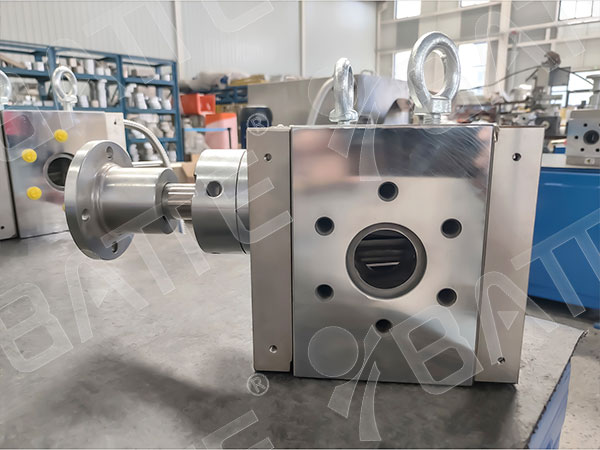
Material impurities and lubrication failure are another major factor exacerbating flow rate decline. Melt pumps rely on the material itself for bearing lubrication; if the lubrication channels of the sliding bearings become clogged by carbonized coke carried in the melt or metal debris shed from the final shrink tank, this will directly lead to inadequate bearing lubrication, causing dry friction that accelerates component wear. Furthermore, hard metallic foreign objects can directly jam the gears, causing fatigue cracks at the gear roots or even tooth breakage, which completely disrupts normal gear meshing and leads to a sudden drop in conveying capacity. Meanwhile, the accumulation of carbonized coke between the teeth not only alters the force distribution on the gears but also reduces the space available for material between the teeth, further decreasing the melt conveying volume per unit rotational speed.
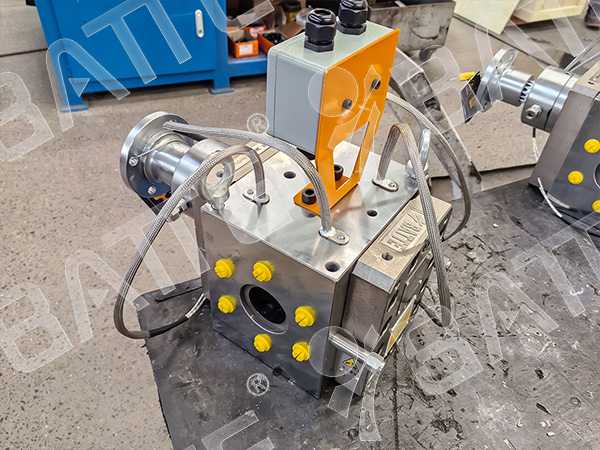
Poor system feeding and external blockages can also cause a gradual decrease in flow rate; such issues can be prevented through proactive intervention during routine maintenance. When the filter screen of a screen changer becomes clogged with impurities after prolonged use, it increases feeding resistance, resulting in insufficient melt supply to the pump. Consequently, the gear cavities cannot be fully filled with melt, causing the actual output flow rate per unit rotational speed to drop; Gradual blockage of the feed inlet by solidified melt or impurities, as well as inlet valves that are not fully open, can have the same effect. Additionally, heating system malfunctions can cause the melt temperature to drop, viscosity to surge, and flow resistance to increase, all of which slow down the feed rate and ultimately result in a gradual decrease in pump output flow rate. During production, regularly inspecting the screens, cleaning the feed channels, and monitoring the heating system temperature can effectively prevent flow rate decline caused by these factors.
Email: sale@meltpump.com
WhatsApp: +86 158 3833 1071