Melt Pump Repair: 4-Step Standard Procedure
Melt gear pumps are core metering units for plastic extrusion, film casting, compounding and fiber production. Long-time operation leads to gear wear, carbonized polymer buildup, seal damage and pressure fluctuation. Improper repair often shortens service life or triggers repeated breakdowns. Below is the industry-proven four-step melt pump repair process for extrusion processors and maintenance teams.
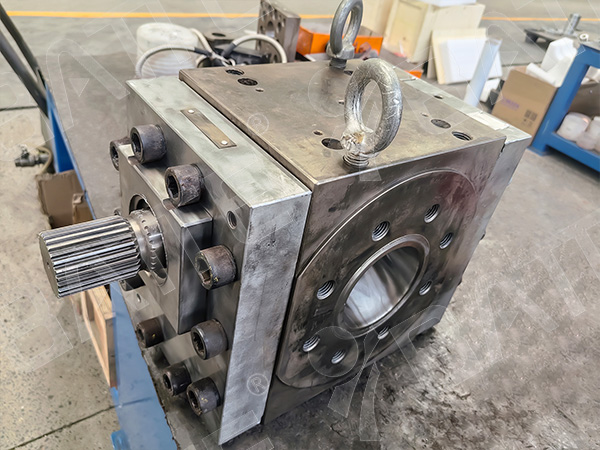
Step 1: Safe Disassembly & Position Recording
Before disassembly, isolate power, cool down the pump body and cut off melt feeding. Take photos and mark the orientation of gears, bushings, seal assemblies and end plates. Do not swap matched precision parts randomly. Use a soft-jaw vise to fix the pump housing to avoid nicks and scratches on sealing surfaces. Remove bolts evenly in diagonal sequence. Extract gears, shafts, bearings and seals gently. Place all components on a clean non-abrasive workbench and sort hardware separately.
Key check before teardown: record abnormal symptoms — pressure swing, low output, leakage, overheating or seized rotation, which guides later failure analysis.
Step 2: Deep Cleaning & Precision Inspection
Carbonized plastic residue is the top hidden trouble for melt pumps. Remove old polymer via high-temperature baking furnace or professional cleaning media. Never use hard tools to scrape gear tooth faces and clearance surfaces. Once fully cleaned and cooled, measure critical clearances with micrometers and feeler gauges: gear end clearance, radial clearance and bushing clearance. Inspect gears for pitting, abrasion and cracks; check bushings and shaft sleeves for scoring; verify static and dynamic seals for hardening or deformation.
Classify parts into reusable, repairable and replaceable. Worn sealing rings and cracked bushings should be replaced directly instead of reassembly.
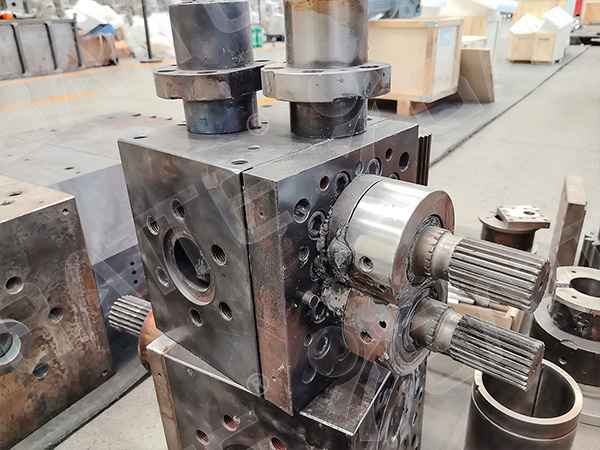
Step 3: Component Replacement & Precision Matching
This step decides whether the repaired pump can regain original volumetric efficiency. Fit new high-temperature seals, graphite or alloy bushings according to OEM tolerance. Polish minor burrs on end plates with fine abrasive stone. Apply compatible high-temperature anti-seize compound on threads and lubricate bearing surfaces with specified high-temperature grease. Confirm gear meshing direction and phase mark alignment. Avoid forced pressing that causes distortion of precision mating faces.
Double-check cooling channels for blockage, as seal cooling failure is a frequent cause of early leakage after repair.
Step 4: Assembly, Preheating & Hot Commissioning
Assemble parts in reverse order of disassembly, tighten bolts crosswise and evenly to keep parallelism of end covers. After assembly, perform cold hand rotation test: the shaft should turn smoothly without stuck points or uneven resistance. Mount the pump back to the extrusion line, complete piping and thermocouple connection. Raise temperature gradually to working melt temperature and hold for sufficient soaking time. Start at low speed first, monitor inlet/outlet pressure, flow stability and seal points.
Run a 30–60 minute hot test. If pressure stays steady and no leakage appears, the repair is qualified. Record test data for future maintenance reference.
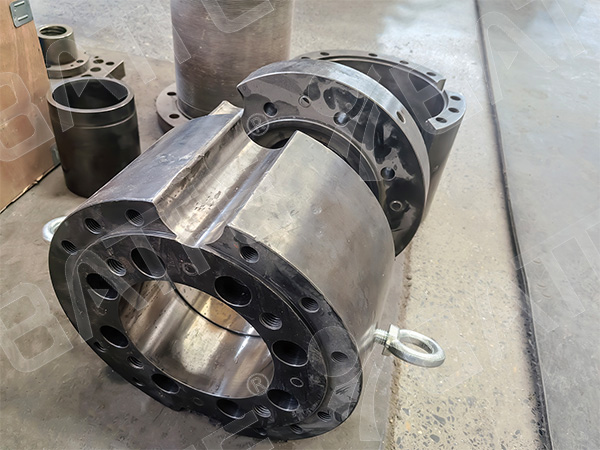
Scheduled preventive maintenance reduces urgent melt pump overhaul costs. For PET, PP, PE, BOPP and hot-melt extrusion applications, check clearances and seal conditions regularly. Send severely worn melt pumps to professional service workshops for reconditioning rather than on-site makeshift fixes.
Email: sale@meltpump.com
WhatsApp: +86 158 3833 1071