The larger the melt pump, the better!
Many customers have a misconception when selecting a melt pump: choosing a larger displacement for the melt pump is always correct, as a larger pump has sufficient margin for future production expansion. In actual production, the larger the specifications of the melt pump, the better. Blindly choosing a large displacement melt pump can actually bring a series of production hazards, and even affect the stable operation of the entire extrusion line.
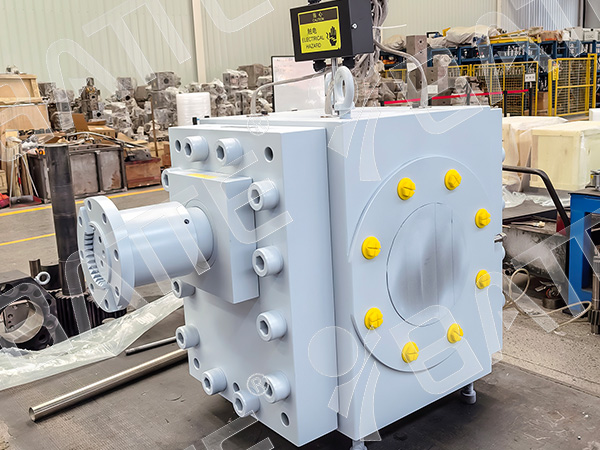
What practical problems will large displacement melt pumps encounter
1. The pump body speed is too low, which increases the risk of thermal degradation of the melt
The melt pump is a positive displacement gear pump, and the larger the displacement, the lower the required speed for the same output. If a large pump is used with a small flow rate and the gear speed is very low, the material will have a significantly longer residence time inside the pump chamber. Materials such as PET, PP, PVC, and some modified plastics are prone to thermal degradation due to prolonged high-temperature retention, resulting in yellow spots, black spots, yellowing of the material strip, and product bubbles, which directly affect the quality of the finished product.
2. Unstable output pressure and increased pressure fluctuations
The melt pump needs to maintain a reasonable operating speed range to ensure the measurement accuracy of gear meshing. The speed is too low, the gear tooth cavity is not fully filled, the measurement stability decreases, and the extrusion pressure fluctuation increases. Direct manifestations: uneven thickness of sheet materials, large deviation in film thickness, intermittent extrusion and discharge, and a decrease in finished product qualification rate.
3. Energy consumption does not decrease but instead increases, leading to increased equipment wear and tear
The large-sized melt pump has a heavier pump body and larger specifications for gears, bearings, and seals. Under low production conditions, the motor and reducer still need to drive the entire large pump body to operate, resulting in high basic losses. Under low-speed conditions, the lubrication conditions deteriorate, and the wear of bearings and sliding pairs accelerates, which will shorten the service life of the melt pump and increase maintenance costs in the later stage.
4. Increased equipment costs result in investment waste
The procurement cost of high displacement melt pumps is higher, and the specifications of the supporting motors, reducers, heating and cooling components are synchronously increased. If the actual output of the current production line cannot reach the rated working condition of the pump, it is equivalent to spending money on a large pump and only utilizing the capacity of a small pump, resulting in equipment investment waste.
5. Partial working conditions are prone to reflux and pressure relief hazards
Below the reasonable operating speed range, the sealing meshing effect of the gear pump decreases, and the probability of medium backflow increases. For high viscosity materials, it is easy to experience slow pressure establishment, difficulty in pressure establishment, and inability to achieve the process set pressure.
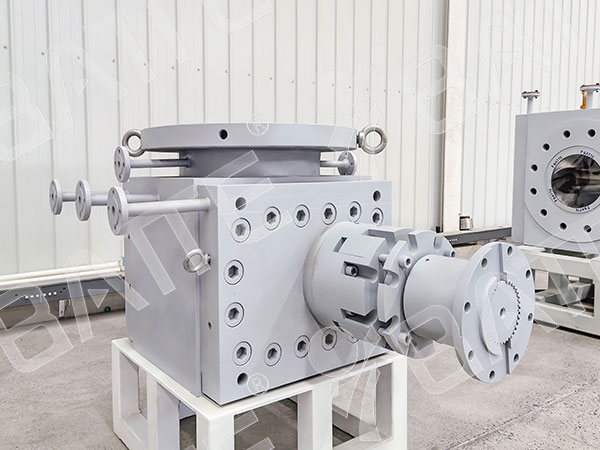
Correct selection ideas for melt pumps
Based on the actual stable output of the production line, priority should be given to operating the melt pump in the optimal speed range recommended by the manufacturer (generally 10-60r/min, adjusted according to material viscosity). At this time, the measurement accuracy, service life, and material thermal stability are comprehensively optimal.
If there are expansion plans in the future, do not simply choose oversized pumps. Prioritize accounting for the actual increase in production capacity in the next 1-2 years, reserve a reasonable margin, and suggest controlling the margin at 20% -40%. It is not recommended to double or enlarge the specifications.
Focus on material viscosity: high viscosity, heat sensitive materials, and avoid selecting pumps that are too large. Material retention time is a key indicator for selection; For materials with low viscosity and good thermal stability, the excess can be moderately relaxed.
Simultaneously matching the extruder and screen changer system, the production capacity of the melt pump, extruder host, and screen changer should be matched with each other. Choosing a larger melt pump alone will not fully utilize the advantages of the entire system.
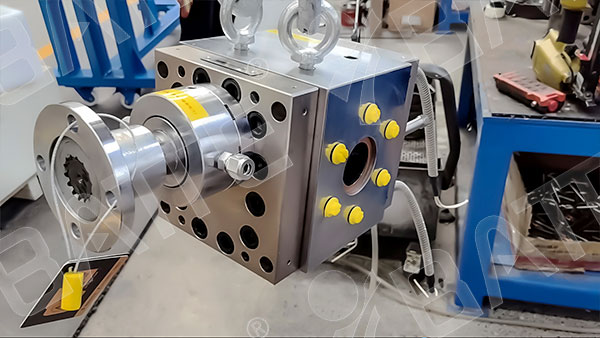
The selection of melt pumps should pay attention to the matching of working conditions, and suitability is the best, not the larger the displacement, the better. A large pump ≠ has better performance. Choosing a large displacement that deviates from actual production can bring a series of troubles such as material degradation, large pressure fluctuations, fast wear, and investment waste. When selecting, it is necessary to comprehensively calculate the material characteristics, existing production capacity, and future planned production capacity, so that the melt pump can operate in the optimal speed range, in order to fully realize the core value of stabilizing pressure, measuring, and improving product quality.
Email: sale@meltpump.com
WhatsApp: +86 158 3833 1071