Precision Extrusion Melt Pumps for PVC
In the field of plastics processing, polyvinyl chloride (PVC) is widely used in the large-scale production of various products—including pipes, sheets, films, and profiles—due to its excellent mechanical properties, corrosion resistance, and cost-effectiveness. However, the inherent heat-sensitive nature of PVC results in an extremely narrow processing window. The material is highly sensitive to temperature fluctuations during processing and is prone to decomposition and carbonization due to localized overheating, which can even lead to char defects. This not only severely affects the appearance and internal performance of the final product but also disrupts production line continuity, causing significant economic losses. Addressing this core pain point in the PVC processing industry, Zhengzhou Bate, leveraging its deep technical expertise and in-depth analysis of PVC material properties, has developed and launched a highly specialized PVC melt gear pump, providing comprehensive technical support for precision PVC extrusion.
I. Core Technical Challenges in PVC Material Processing
As a typical amorphous, heat-sensitive polymer, the technical challenges in PVC processing primarily center on the following three aspects, which directly limit the stability of the extrusion process and product precision:
Extremely Poor Thermal Stability: During processing, if PVC is exposed to high temperatures or prolonged heat, it is highly prone to dehydrochlorination (HCl) degradation reactions. This leads to molecular chain breakage and material discoloration, ultimately resulting in a significant deterioration of the product’s mechanical properties and rendering it unusable.
High Melt Viscosity and Sensitivity to Shear: PVC melts have inherently high viscosity and exhibit significant sensitivity to shear rate and shear stress. During processing, precise balancing of processing temperature and shear force parameters is required. If parameters are improperly matched, it can easily lead to melt fracture, material degradation, and other issues, thereby affecting extrusion stability.
Stringent requirements for process control precision: During PVC extrusion, even minor temperature fluctuations and pressure pulsations are amplified, directly causing unstable melt flow at the die exit. This ultimately results in various defects such as uneven sheet thickness, deviations in pipe roundness, and surface scratches on profiles. In traditional processing methods, relying solely on a screw extruder to build pressure and convey material inevitably leads to significant temperature and pressure pulsations, making it difficult to meet the process requirements for precision PVC extrusion.
II. Core Solution: PVC-Specific Melt Gear Pumps
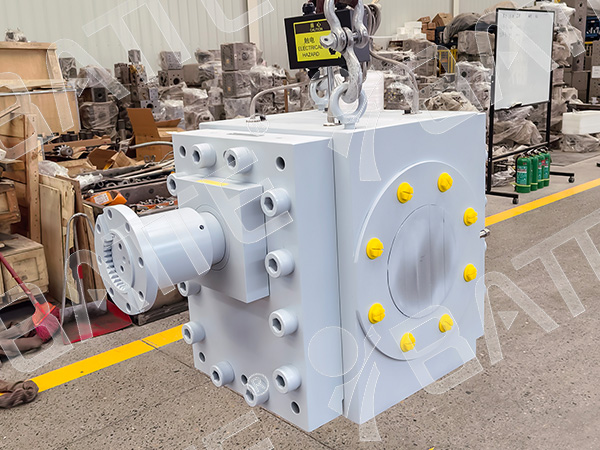
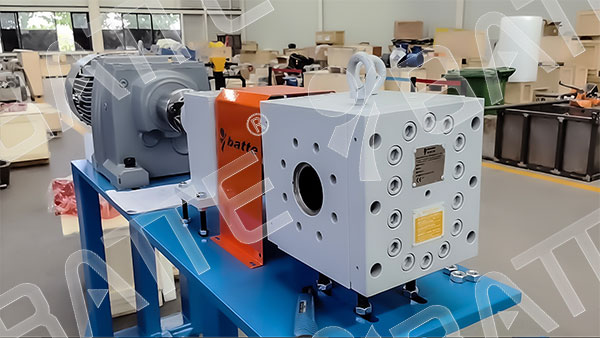
Zhengzhou Batte, addressing the heat-sensitive and high-viscosity characteristics of PVC, has leveraged years of experience in extrusion equipment R&D to introduce a PVC-specific melt gear pump. Its core solution lies in utilizing the positive displacement principle to separate the “pressure buildup” and “metering” functions from the screw extruder during the extrusion process. This achieves precise control and revolutionary optimization of PVC melt conveyance, fundamentally resolving the pain points of traditional processing. This PVC-specific melt gear pump features a comprehensive, adaptable structural design tailored to the material’s processing characteristics. Its key advantages are as follows:
Optimized flow channel and gear structure design: The pump inlet features a funnel-shaped, streamlined flow channel design, ensuring that the PVC melt enters the gear meshing zone smoothly and stably. This minimizes melt residence time and shear-induced heat generation within the flow channels, preventing material degradation and carbonization caused by flow dead zones. Simultaneously, by precisely optimizing internal flow channel dimensions and gear parameters, the pump achieves low pressure drop and high uniformity during melt conveyance, further enhancing extrusion stability.
Built-in Melt Self-Lubrication System: Utilizing a unique integrated lubrication channel design, the system employs the PVC melt itself as the lubricant, allowing a small amount of melt to continuously lubricate critical moving parts such as gears and bushings. The lubricated melt then enters downstream forming equipment along with the main material, eliminating the need for an external oil supply system. This design not only simplifies the equipment structure and reduces maintenance costs but also fundamentally eliminates contamination of the PVC material by external lubricants, making it particularly suitable for the production of PVC products with high material cleanliness requirements, such as medical and food packaging applications.
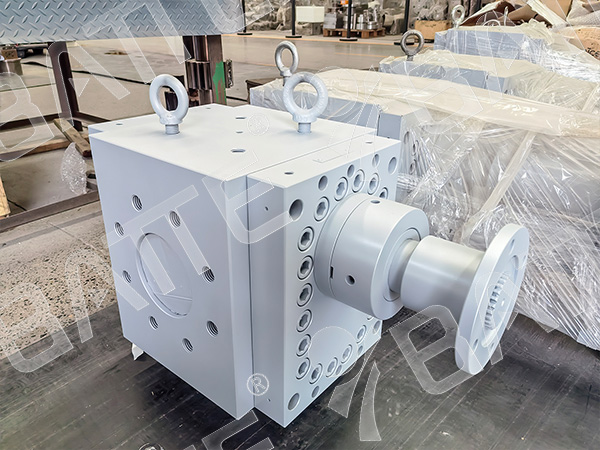
High-Precision Gear Clearance and Positive Displacement Structure: Through precision machining processes that strictly control gear meshing clearance, combined with a positive displacement chamber design, the melt gear pump achieves precise metering and stable control of PVC melt flow. This effectively eliminates extrusion instability caused by factors such as uneven upstream feeding, temperature fluctuations, and screw speed variations, ensuring a constant melt outlet flow rate and ultimately enabling high-precision, uniform production of PVC products.
Email: sale@meltpump.com
WhatsApp: +86 158 3833 1071