The Role of Melt Pumps in PE Modified Masterbatch Production
In the plastic modification industry, the production process of PE modified masterbatch plays a decisive role in product quality. As the core equipment, the performance of the melt pump directly impacts the uniformity of the masterbatch, the plasticization effect, and the final mechanical properties. Compared to traditional extrusion processes, PE modification production lines utilizing melt pumps achieve more stable melt pressure control, with fluctuations kept within ±1%. This is crucial for maintaining the integrity of the polyethylene molecular chain structure.
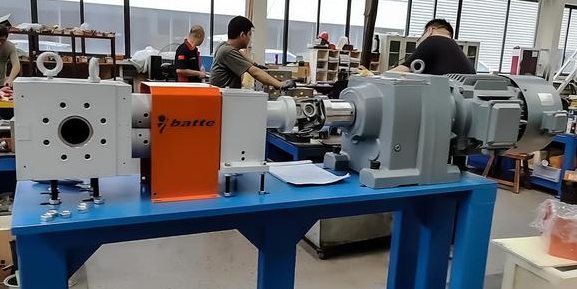
The core role of melt pumps in PE modification manifests in three key aspects: First, precise flow control capability. Through high-precision gear meshing structures, they uniformly blend PE base materials with fillers at varying ratios, preventing “fish-eye” defects caused by localized overconcentration.
For different modification requirements, melt pumps require tailored configurations. When producing flame-retardant PE masterbatch, nickel-based alloy pump bodies are selected to resist corrosion from flame retardants. When processing high-concentration masterbatch with filler content exceeding 60%, reinforced bearing systems and larger displacement gear sets must be equipped.
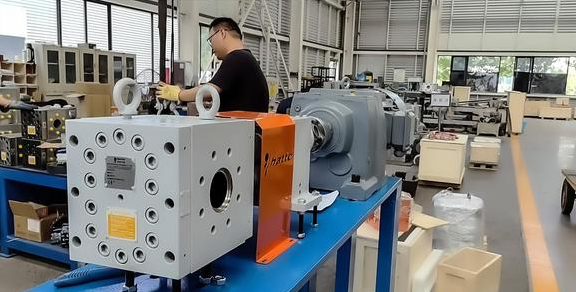
Temperature control is critical for ensuring PE modification quality. Premium melt pumps feature multi-zone temperature control systems that utilize PID algorithms to maintain temperature differences within ±0.5°C across zones. Experiments demonstrate that when processing HDPE modified masterbatch, melt temperature fluctuations exceeding 2°C cause variations in crystallinity, ultimately affecting the impact strength of the final product.
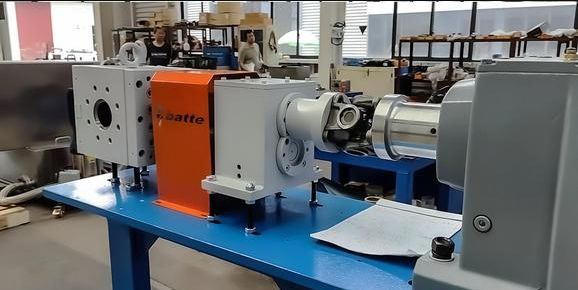
For installation and maintenance, axial alignment of the melt pump demands particular attention. Practice indicates that coupling misalignment exceeding 0.05mm causes abnormal gear wear. Routine maintenance should prioritize monitoring gearbox oil cleanliness, with high-temperature synthetic lubricant replacement recommended every 500 hours. After implementing laser alignment instruments for installation, one enterprise reduced equipment failure rates by 70%. Addressing the common issue of degradation product buildup in PE processing, a new self-cleaning melt pump incorporates a specialized coating on the flow channel walls, reducing carbide deposits by over 80%.
Email: sale@meltpump.com
WhatsApp: +86 158 3833 1071